


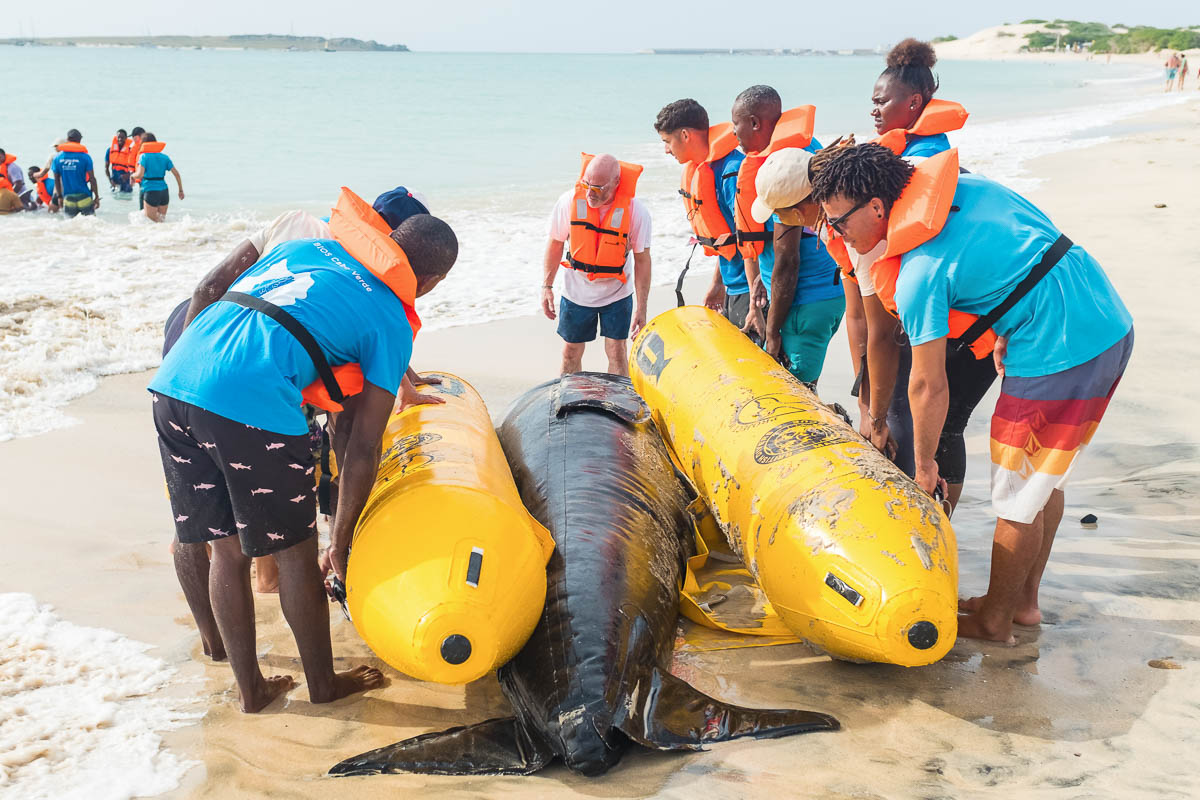
On the Cabo Verde islands of Boa Vista and Sal, whale and dolphin strandings occur repeatedly — more than 70 cases have been recorded since 2000. To increase the chances of rescuing these animals in emergencies, we implemented a special training project this year.
A total of 74 participants from nature and animal protection organizations, the police, fire department, local animal shelters, and the fishing community “Guardiões do Mar” took part in hands-on workshops led by two experts from British Divers Marine Life Rescue in the UK. In both theory and practice, participants learned the basics of biology and first aid, safe handling of rescue equipment, and emergency coordination. The goal was to strengthen teamwork and professionalize the response to whale and dolphin strandings.
The Right Equipment Makes All the Difference
Without proper equipment and sufficient expertise, rescue teams can often only move stranded animals a few meters back into the water — sometimes handling them incorrectly and further compromising their condition. In the past, animals were often dragged by their tails or fins — a dangerous and incorrect method that can cause serious injuries.
Proper equipment is also essential for protecting rescuers and minimizing risk during operations. Specialized gear such as stretchers, pontoons, and protective mats can increase the chances of saving at least part of a stranded group. It also allows animals to be supported during transport, kept upright, and have their balance restored.
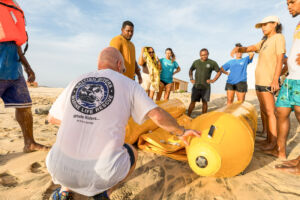
Practical whale Rescue Training on the beach
Looking Ahead: Sustainability and Ongoing Training
To maintain progress, regular refresher trainings are planned so the team can respond optimally to individual or mass strandings at any time. Strandings are unpredictable and complex, but with proper training and equipment, we aim to improve rescue outcomes.
Stay tuned as we continue to share updates on this project. Are you following us on social media? Follow now and never miss an update!